
Yankel Feather
- Robert Smith
- Jun 5
- 2 min read

Yankel Feather was a distinctive British painter whose colourful figure studies, still lifes, and landscapes earned increasing recognition over a career spanning more than six decades. Although he worked alongside and befriended notable post-war artists such as L.S. Lowry and Terry Frost, Feather remained an independent voice, creating deeply personal works inspired by memory, observation, and lived experience.
Born in Liverpool in 1920, Feather grew up in poverty near the city's docks. One of seven children, he developed an early interest in art while attending local schools. Before the outbreak of the Second World War, he studied part-time at Woolwich Polytechnic in London. During the war, he worked in aircraft production and later served in the Highland Light Infantry, experiences that took him across Britain.
Feather's artistic education was shaped not only by formal study but also by frequent visits to galleries, where he admired the works of Old Masters such as Rembrandt and Velázquez. Over time, his interests shifted toward modern British art, particularly the painters associated with St Ives, including Ivon Hitchens, Roger Hilton, and Francis Bacon. Despite these influences, his work remained rooted in personal observation and a remarkable visual memory.
A significant friendship began in 1947 when Feather met Terry Frost in St Ives. The two artists maintained a close relationship for more than fifty years. While Frost embraced abstraction, Feather developed a more figurative style, characterised by expressive colour, energetic brushwork, and a gentle sense of humour.
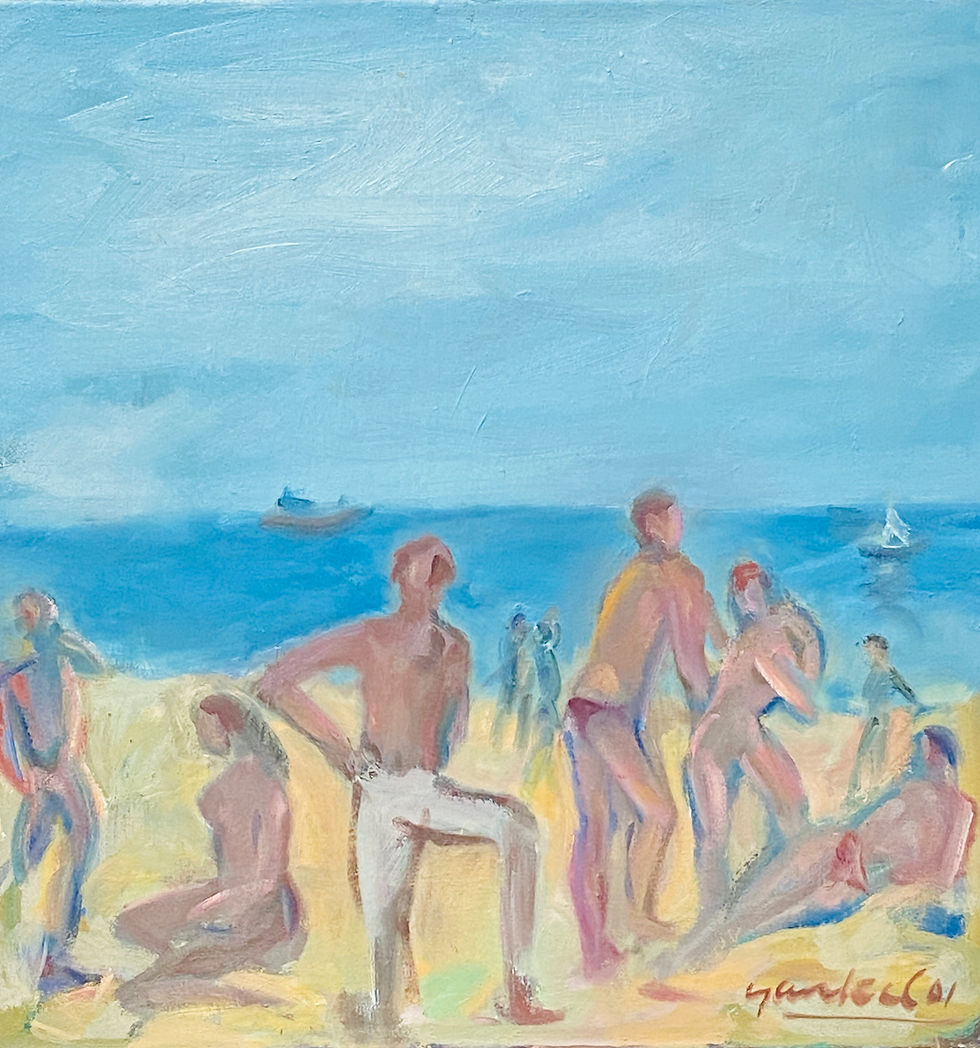
Throughout his career, Feather painted subjects that reflected his life and surroundings. His work ranged from nostalgic scenes of Liverpool's docklands and working-class communities to richly coloured still lifes and atmospheric coastal landscapes inspired by Cornwall and Sussex. His later series of beached boats became poignant reflections on ageing, change, and the passage of time.
For many years, Feather balanced painting with other occupations, including running a Liverpool nightclub and working as an antiques dealer. As a result, his artistic output was often irregular. However, after moving to Cornwall in the late 1970s, he devoted himself more fully to painting and became increasingly prolific.
Although his exhibiting career was intermittent, Feather showed work in respected galleries in London, St Ives, and elsewhere. By the early 2000s, his paintings attracted growing commercial and critical attention, with several exhibitions achieving considerable success.
Feather never lost his connection to Liverpool. Influenced by L.S. Lowry, he frequently revisited memories of the city's streets, docks, and communities in his paintings. Through his nightclub and social circles, he also became acquainted with several figures associated with the Beatles, including Brian Epstein and John Lennon. His colourful anecdotes and rich artistic legacy reflected a life deeply connected to both the cultural history of Liverpool and the artistic communities of Cornwall and beyond.
Today, Yankel Feather is remembered as a gifted and original painter whose work combined technical skill, poetic colour, and a profound affection for the people and places that shaped his life.


Comments